

Frozen Shoulder Chiropractor in Marietta, GA
When Reaching Behind Your Back Feels Impossible.
Frozen shoulder can lock up your arm for months. Here's how chiropractic care in Marietta supports motion in the shoulder, neck, and upper back.
"I can't fasten my bra or reach my back pocket anymore. It just gets stuck."
If that sounds like you, frozen shoulder (adhesive capsulitis) can be one of the most frustrating problems to live with. The capsule around the shoulder joint thickens and tightens, and motion slowly disappears — reaching overhead, behind your back, or out to the side.
It tends to move through phases: painful freezing, a stiff "frozen" stage, and a gradual thaw. Patients from Marietta, East Cobb, Smyrna, and Kennesaw come to us for help keeping as much motion as possible and easing the strain on surrounding areas.
Quick Answer
Frozen shoulder (adhesive capsulitis) is a condition where the shoulder joint capsule thickens and stiffens, gradually limiting motion. It's most common between ages 40 and 60 and in people with diabetes. Chiropractic care can support recovery by improving motion in the neck, upper back, and shoulder region, which helps the body compensate and move more comfortably. Many cases also benefit from medical care.

What Contributes to Frozen Shoulder?
The exact cause of frozen shoulder isn't fully understood, but certain factors raise the risk. When the shoulder stiffens, the neck and upper back often take over — leading to neck pain and upper back pain too.
Common contributors:
Immobilization
Keeping the arm still after an injury or surgery is a common trigger.
Diabetes and thyroid conditions
These are linked to a higher risk of frozen shoulder.
Untreated shoulder pain
Avoiding movement because of shoulder pain can let stiffness set in.
Neck and upper back stiffness
Poor motion above the shoulder can affect how the joint moves.
Age and hormones
Most common in people 40–60, and more common in women.
"Frozen shoulder takes patience. My goal is to keep everything around that shoulder moving well — the neck, upper back, and shoulder blade — so you hold onto as much motion as possible while it heals."— Dr. Steve Landry, DC · United Chiropractic Center · Marietta, GA
Why Frozen Shoulder Recovery Can Feel So Slow
Frozen shoulder naturally takes months, and sometimes longer, to resolve. Pain relief and medical treatments can help. Meanwhile, the rest of your body compensates, and that can create new problems.
Think of a squeaky door that you stop using. The longer it stays shut, the harder it is to open again.
Team care. Frozen shoulder often benefits from coordinated care. We'll let you know if your case would benefit from a medical evaluation alongside chiropractic.
How Chiropractic Care Supports Frozen Shoulder Recovery
Your plan supports motion in the shoulder and the areas that compensate for it.
Find the cause
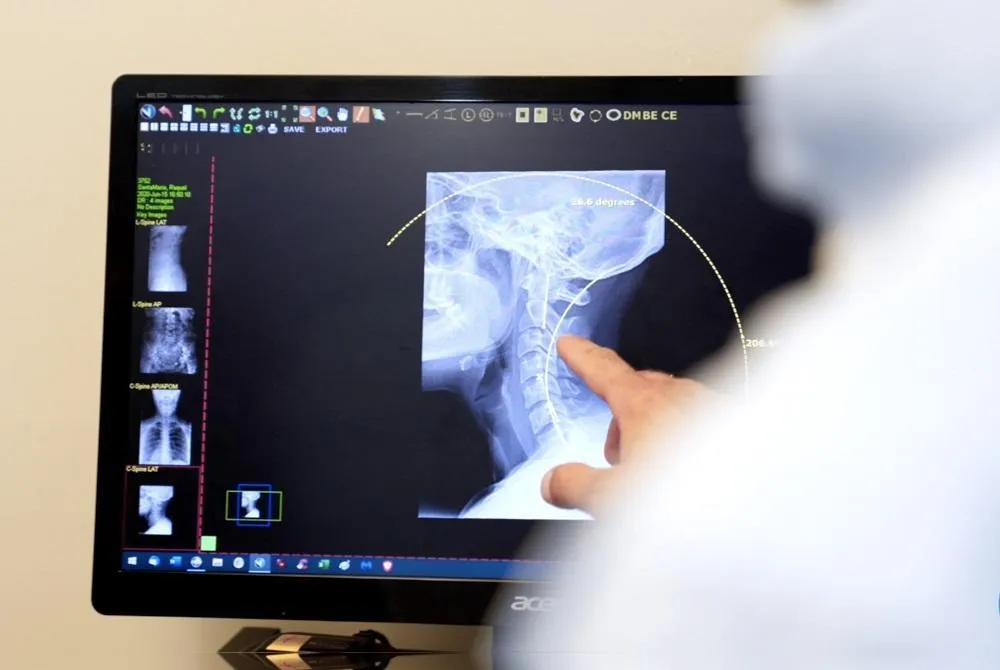
We pinpoint where your frozen shoulder is actually coming from — spine, nerve, joint, or a combination — using your exam, nerve scan, and X-rays when needed.
Build your plan
You get a written care plan with a clear goal and an honest timeline. No mystery packages, no guesswork.
Correct, gently
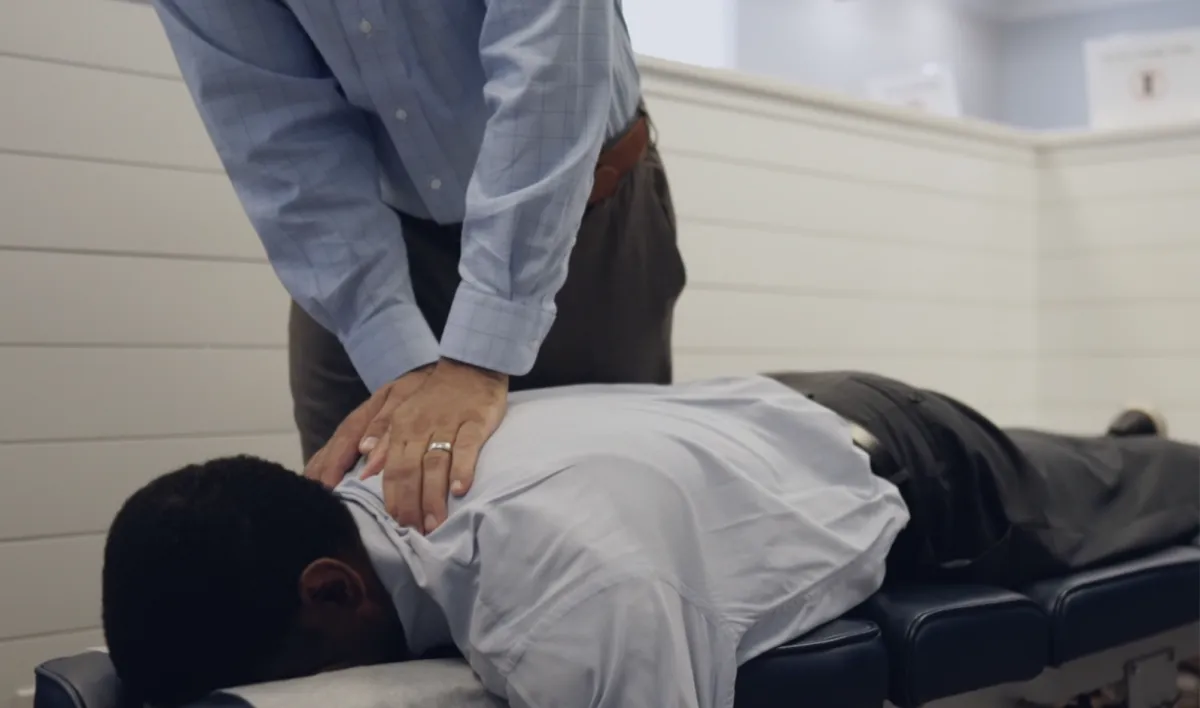
Gentle adjustments restore motion to the neck, upper back, and shoulder region when appropriate, within a comfortable range.
Re-measure
We re-check with the same objective tools so you can see progress, not just hope for it.
Your First Frozen Shoulder Visit at United Chiropractic in Marietta
Your new patient visit is a comprehensive exam: a full spinal exam, a Tytron nerve scan, postural X-rays if needed, and a one-on-one consultation with Dr. Landry. Here's exactly what to expect.
We listen first
You'll tell us what you're feeling, when it started, what makes it better or worse, and what you've already tried. Your story is the first clue.
Tytron nerve scan
A quick, painless scan measures temperature differences along your spine to show where nerve stress is showing up — so we're not guessing.
Digital postural X-rays (if needed)
If your exam calls for it, X-rays let us see the actual alignment of your spine and joints. Wear whatever you're comfortable in — there's no need to change. All of our exams and scans are performed in your regular clothes.
A clear answer
Dr. Landry walks you through what he found, what it means, and whether he can help. If your case needs another specialist, he'll tell you that too.
Frozen Shoulder FAQs — Chiropractic Care in Marietta
Can a chiropractor help frozen shoulder?
Chiropractic care can support frozen shoulder recovery by improving motion in the neck, upper back, and shoulder region. Frozen shoulder often needs time and sometimes medical care too, and Dr. Landry will be honest about what to expect.
How long does frozen shoulder last?
It often lasts many months and can take a year or more to fully resolve. It typically moves through freezing, frozen, and thawing phases.
Will frozen shoulder go away on its own?
Many cases gradually improve, but full motion doesn't always return without care. Keeping the surrounding areas moving helps.
What makes frozen shoulder worse?
Avoiding all movement, sleeping on the affected side, and forcing painful stretches during the freezing phase can make it worse.
What's the difference between frozen shoulder and a rotator cuff injury?
With frozen shoulder, both you and someone else moving your arm hit the same stiff limit. With a rotator cuff injury, the arm can often be moved by someone else, but it's painful or weak when you lift it yourself.
Who is most likely to get frozen shoulder?
People ages 40 to 60, women, people with diabetes or thyroid conditions, and anyone whose arm has been immobilized after injury or surgery.
Do I need a referral?
No referral is needed. You can schedule directly with United Chiropractic Center in Marietta.
How much does frozen shoulder care cost?
Every plan is different, so we review costs in person after your exam. Contact us or plan your visit online. We also offer a complimentary benefits check and a chiropractic savings plan for patients without insurance.
REAL PEOPLE. REAL RESULTS. READ MORE REVIEWS
I had bursitis in my shoulder, which was relieved surprisingly quickly and my teenage daughter had complained of knee pain for years which she no longer complains about!
Dr Steve is the best. I've been going to him for 7 years now. I had issues with my neck, back, knees and shoulders. I can say I are working much better now.
A wonderful team who is personal & who cares! I enjoy my time at United Chiropractic & always feel a sense of empowerment when leaving each adjustment.
Sources & References
Office Hours
Schedule Your Frozen Shoulder Evaluation
Keep your shoulder and the areas around it moving. Your visit includes a full exam, Tytron nerve scan, X-rays if needed, and a consultation with Dr. Landry.
Plan Your Visit Today