

Plantar Fasciitis Chiropractor in Marietta, GA
That First Step Out of Bed Shouldn't Feel Like Stepping on a Nail.
Heel pain often comes from how your whole body carries weight — not just your foot. Here's how corrective chiropractic care in Marietta helps.
"The first ten steps every morning are brutal. Then it eases up — until I sit down again."
If that sounds like you, you've met plantar fasciitis. The plantar fascia is a thick band along the bottom of your foot. When it's overloaded, it gets irritated where it attaches to the heel — causing that sharp, stabbing first-step pain.
Your foot carries what's above it. When the pelvis tilts or a hip rotates, one foot can take more load than the other. Patients from Marietta, East Cobb, Smyrna, and Kennesaw often find their heel pain makes more sense once we look at the whole chain.
Quick Answer
Plantar fasciitis is irritation of the thick band of tissue on the bottom of the foot, causing sharp heel pain that's often worst with the first steps in the morning. A chiropractor can help by improving alignment of the pelvis, hips, and lower body so the foot isn't overloaded, and by addressing the foot and ankle when appropriate.



What's Really Behind Your Plantar Fasciitis?
Your feet are the foundation. When something above them is out of line, the foot compensates — often by collapsing inward, which stretches the plantar fascia. That's why heel pain often shows up with knee pain or hip pain.
Common contributors:
Uneven weight bearing
A tilted pelvis can shift more load onto one foot.
Foot mechanics
Flat feet, high arches, and overpronation all stress the fascia.
Tight calves
Tight calf muscles pull on the heel and increase fascia tension.
Standing jobs and new workouts
Long shifts on hard floors or a sudden jump in running or walking can overload the foot.
Low back nerve irritation
Nerves to the foot start in the low back — sometimes part of the picture with sciatica.
"A sore heel is often the end of a longer story. When I check a plantar fasciitis patient, I look at how they stand and walk, because the foot is often absorbing a problem from higher up."— Dr. Steve Landry, DC · United Chiropractic Center · Marietta, GA
Why Plantar Fasciitis Lingers for So Many in Marietta
Stretching, new shoes, and rest can help heel pain. But if your body keeps loading one foot unevenly, the fascia keeps getting irritated, and many people deal with it for months.
Think of a building with a sinking corner. You can patch the cracks, but they'll keep appearing until the foundation is level.
We look from the ground up — and the top down. Your exam includes how you stand, walk, and carry weight, so care aims at the cause.
How Corrective Chiropractic Care Helps Plantar Fasciitis
Your plan addresses what's loading the foot, not just where it hurts.
Find the cause
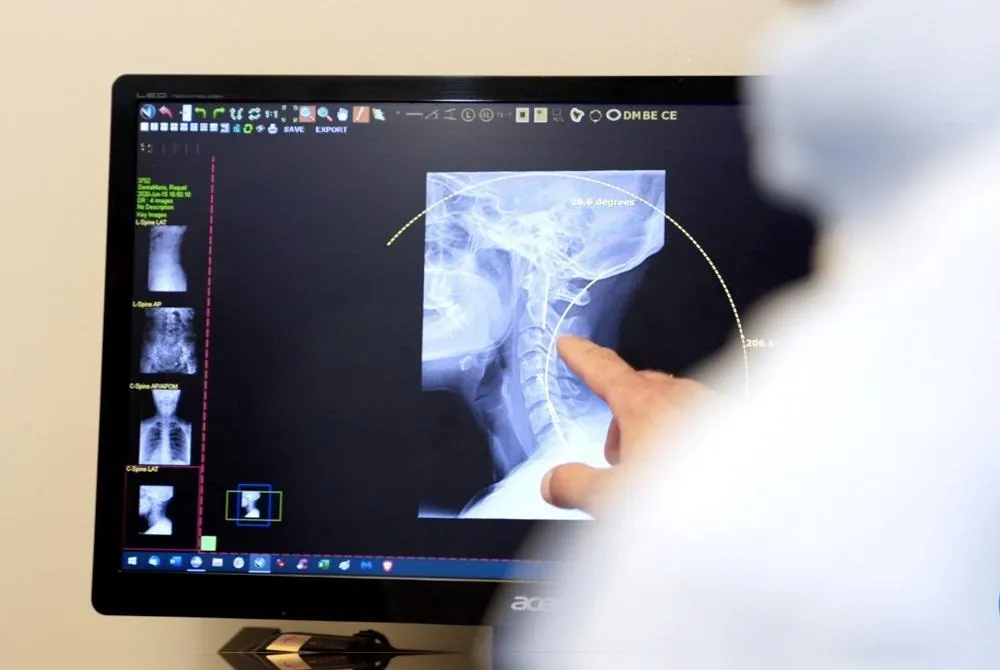
We pinpoint where your plantar fasciitis and heel pain are actually coming from — spine, nerve, joint, or a combination — using your exam, nerve scan, and X-rays when needed.
Build your plan
You get a written care plan with a clear goal and an honest timeline. No mystery packages, no guesswork.
Correct, gently
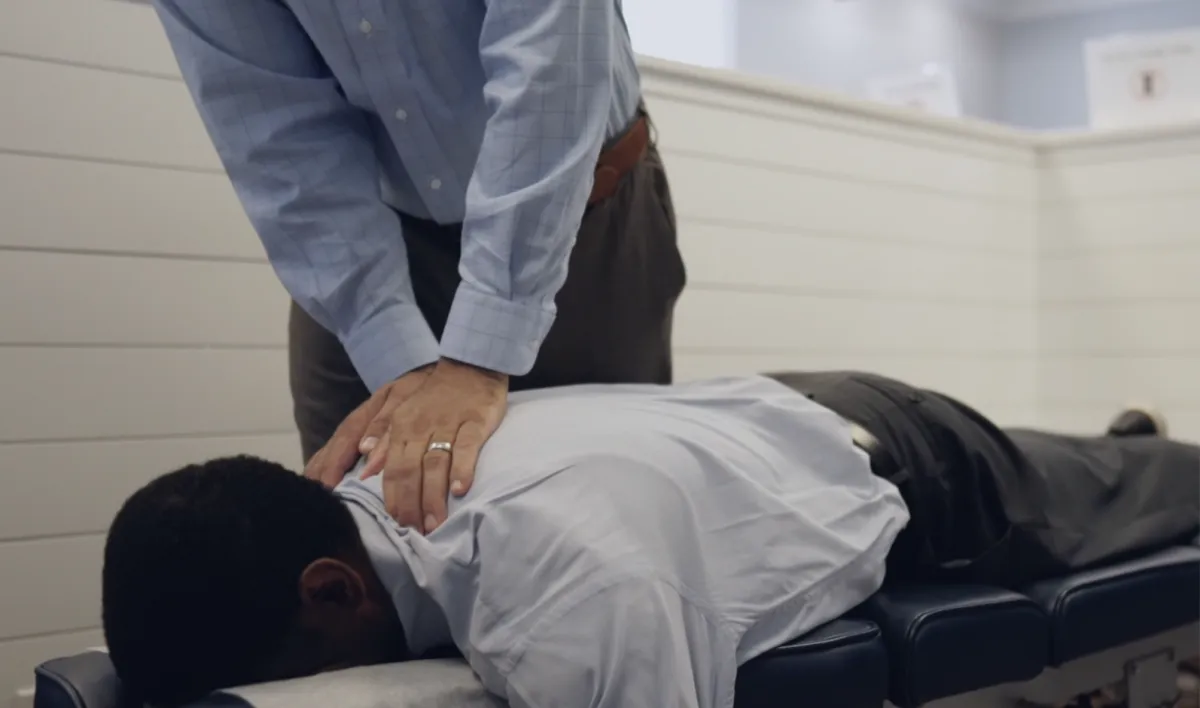
Gentle adjustments restore balance to the pelvis and lower body, and the foot and ankle are addressed when appropriate, so weight is distributed more evenly.
Re-measure
We re-check with the same objective tools so you can see progress, not just hope for it.
Your First Plantar Fasciitis Visit at United Chiropractic in Marietta
Your new patient visit is a comprehensive exam: a full spinal exam, a Tytron nerve scan, postural X-rays if needed, and a one-on-one consultation with Dr. Landry. Here's exactly what to expect.
We listen first
You'll tell us what you're feeling, when it started, what makes it better or worse, and what you've already tried. Your story is the first clue.
Tytron nerve scan
A quick, painless scan measures temperature differences along your spine to show where nerve stress is showing up — so we're not guessing.
Digital postural X-rays (if needed)
If your exam calls for it, X-rays let us see the actual alignment of your spine and joints. Wear whatever you're comfortable in — there's no need to change. All of our exams and scans are performed in your regular clothes.
A clear answer
Dr. Landry walks you through what he found, what it means, and whether he can help. If your case needs another specialist, he'll tell you that too.
Plantar Fasciitis FAQs — Chiropractic Care in Marietta
Can a chiropractor help plantar fasciitis?
Many people with plantar fasciitis improve with chiropractic care that addresses how their pelvis, hips, and feet carry weight. Dr. Landry will tell you after your exam whether chiropractic is a good fit for your heel.
Why does plantar fasciitis hurt most in the morning?
The fascia tightens overnight while you rest. Those first steps stretch it suddenly, which causes the sharp pain. It often eases as you move, then returns after sitting.
Can plantar fasciitis go away on its own?
It often improves over months, but it can be slow and stubborn. Addressing what's overloading the foot can help you recover and lower the chance of it coming back.
What makes plantar fasciitis worse?
Walking barefoot on hard floors, worn-out shoes, long periods of standing, and suddenly increasing running or walking tend to aggravate it.
What's the difference between plantar fasciitis and a heel spur?
Plantar fasciitis is irritation of the fascia. A heel spur is a bony growth on the heel bone that may show up on X-rays. Many people have spurs without pain, and the pain is usually from the fascia.
When should I see a doctor right away?
Get prompt care if your heel pain started with a fall or injury, you can't put weight on the foot, or there's numbness, redness, or warmth.
Do I need a referral?
No referral is needed. You can schedule directly with United Chiropractic Center in Marietta.
How much does plantar fasciitis care cost?
Every plan is different, so we review costs in person after your exam. Contact us or plan your visit online. We also offer a complimentary benefits check and a chiropractic savings plan for patients without insurance.
REAL PEOPLE. REAL RESULTS. READ MORE REVIEWS
The sweetest and most amazing staff! Dr Landry has been a huge help. I have felt so much improvement from pain in my body I used to deal with daily.
Dr Steve is the best. I've been going to him for 7 years now. I had issues with my neck, back, knees and shoulders. I can say I are working much better now.
Since starting my adjustments, my pain has been significantly reduced, and I feel much better overall. Highly recommend!
Sources & References
Office Hours
Schedule Your Plantar Fasciitis Evaluation
Find out what's overloading your foot. Your visit includes a full exam, Tytron nerve scan, X-rays if needed, and a consultation with Dr. Landry.
Plan Your Visit Today